Skip to content
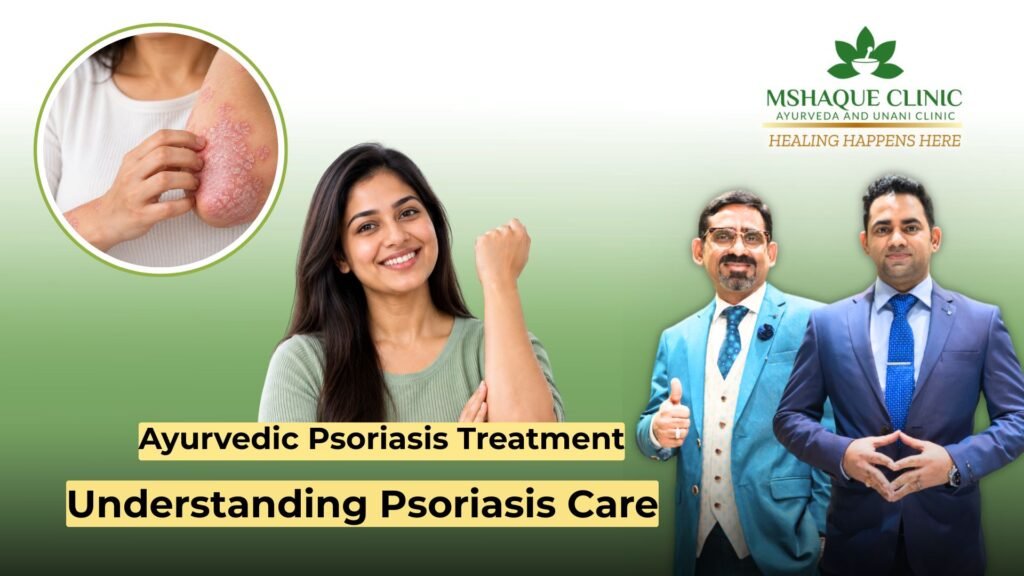
Psoriasis is a chronic, non-contagious skin condition that affects people across all age groups. It often shows up as dry, scaly patches accompanied by redness, itching and discomfort, and it tends to follow a pattern of flare-ups and remission over months or years. Because psoriasis can persist for a long time and affect day-to-day comfort and confidence, many people begin looking beyond conventional dermatology alone and explore complementary, traditional systems such as Ayurveda alongside their medical care.
This article looks at what psoriasis is, why it develops, and how Ayurvedic Psoriasis Treatment is generally approached as part of a broader, individualized care plan. It is meant to inform, not replace professional medical advice — any treatment decision for psoriasis should be based on a proper consultation and assessment by a qualified doctor.
What Is Psoriasis?
Psoriasis is a chronic skin condition in which skin cells build up faster than usual, leading to thickened, scaly patches on the skin’s surface. It is considered an immune-mediated condition, meaning the body’s immune system plays a central role in how it develops and progresses. Psoriasis is not contagious, and it does not spread from one person to another through contact.
Psoriasis can appear in several forms, and the pattern often varies from person to person:
- Plaque psoriasis – the most common form, appearing as raised, red patches covered with silvery scales, often on the elbows, knees, scalp and lower back.
- Scalp psoriasis – patches that develop on the scalp and can extend slightly beyond the hairline, sometimes causing flaking that resembles dandruff.
- Guttate psoriasis – small, drop-shaped spots that can appear suddenly, sometimes following a throat infection.
- Inverse psoriasis – smooth, red patches that occur in skin folds such as the armpits, groin or under the breasts.
- Nail psoriasis – changes in the nails, including pitting, discoloration or separation from the nail bed.
Because the type and severity of psoriasis can differ so widely, an individualized assessment is important before considering any treatment approach, including Ayurvedic Treatment for Psoriasis.
Common Signs and Symptoms of Psoriasis
Symptoms of psoriasis can vary in intensity, but commonly reported signs include:
- Red or inflamed patches of skin
- Dry, thickened or scaly skin
- Itching, which may range from mild to persistent
- General skin discomfort or sensitivity
- Cracked skin that may occasionally bleed
- Changes in nail texture, thickness or colour
Not everyone experiences all of these symptoms, and the severity can differ from one flare-up to another. If symptoms are new, persistent or affecting daily comfort, a proper evaluation is the appropriate first step.
What Causes Psoriasis?
Psoriasis is considered a complex, multifactorial condition. It is not caused by a single factor, but is understood to involve a combination of:
- Immune-system activity – an overactive immune response is believed to accelerate skin cell turnover, leading to the characteristic patches.
- Genetics – a family history of psoriasis may increase the likelihood of developing the condition.
- Environmental and lifestyle triggers – factors such as stress, skin injury, certain infections, smoking, alcohol consumption and some medications may act as triggers or worsen existing symptoms in susceptible individuals.
Because triggers can differ from person to person, identifying individual patterns often forms an important part of long-term management.
How Ayurveda Approaches Psoriasis
In Ayurveda, skin conditions are traditionally viewed in relation to an individual’s overall constitution, or prakriti, and the balance of the three doshas — Vata, Pitta and Kapha. Psoriasis is often associated with an imbalance that affects the skin and related bodily tissues, and Ayurvedic assessment typically looks at a person’s constitution, digestion, lifestyle and environmental exposures together, rather than focusing on the skin in isolation.
This is why Psoriasis Treatment in Ayurveda is generally described as personalized rather than standardized. Two individuals with similar-looking skin patches may be assessed differently based on their overall health picture, and any Ayurvedic approach is typically built around this individual assessment rather than applied as a one-size-fits-all solution.
It is important to understand Ayurveda as a traditional system of healthcare that some people choose to explore as a complementary approach — not as a guaranteed or universal cure for psoriasis.
Ayurvedic Treatment for Psoriasis
When psoriasis is assessed under qualified Ayurvedic supervision, the approach generally considers several aspects of a person’s health together, rather than treating the skin patches in isolation. Depending on individual assessment, this may include:
- Personalized Ayurvedic medicines, selected according to the individual’s constitution and the nature of their symptoms
- Dietary guidance tailored to the person’s digestive health and identified triggers
- Lifestyle modification, including sleep, activity and daily routine adjustments
- External therapies, where clinically appropriate and determined after assessment
- Stress-management practices, given the recognized link between stress and flare-ups
- Individualized follow-up, since psoriasis often needs to be monitored and managed over time rather than treated as a one-time issue
Any Ayurvedic Medicine for Psoriasis should only be taken under the guidance of a qualified practitioner, since self-medication or unsupervised use of herbal formulations is not advisable for a condition as variable as psoriasis.
Ayurvedic Treatment for Scalp Psoriasis
Scalp psoriasis can behave somewhat differently from psoriasis on other parts of the body. Hair coverage can make patches harder to notice early, and scaling on the scalp is sometimes mistaken for dandruff or dryness, which can delay proper assessment. The scalp’s skin is also more sensitive to certain products and external treatments, so what works elsewhere on the body may not always be suitable for the scalp.
Ayurvedic Treatment for Scalp Psoriasis is generally considered on an individualized basis, taking into account the extent of scalp involvement, the person’s overall skin condition, and any related symptoms such as hair thinning or persistent itching. As with psoriasis elsewhere, professional assessment helps determine whether an Ayurvedic approach is appropriate and how it might be incorporated alongside any existing care.
Diet and Lifestyle Considerations for Psoriasis
While no single food or diet has been shown to cure psoriasis, general healthy habits are often encouraged as part of overall skin and immune health:
- Eating a balanced diet with adequate fruits, vegetables and whole grains
- Staying well hydrated through the day
- Maintaining a regular sleep schedule
- Practising stress-management techniques such as light exercise, breathing practices or relaxation routines
- Being mindful of and avoiding personally identified triggers, whether dietary or environmental
- Following gentle skin-care habits, including mild cleansers and regular moisturization
These habits are generally supportive rather than curative, and they work best as part of a broader plan discussed with a healthcare professional.
Ayurveda and Modern Understanding of Psoriasis
Ayurveda is a traditional system of healthcare with its own framework for understanding skin conditions. At the same time, psoriasis is a medically recognized chronic inflammatory condition, and modern dermatology continues to study and treat it based on clinical evidence.
Rather than viewing these as opposing systems, many people choose to view Ayurveda as a complementary approach that can be considered alongside, not instead of, conventional medical care. Patients already on prescribed treatment for psoriasis should not discontinue or alter their medication without first speaking to their treating doctor.
Consult Experienced Doctors for Personalized Care

Chronic skin conditions like psoriasis benefit from a proper, individualized assessment rather than generic advice. At MSHAQUE Clinic, doctors including Dr. M.S. Haque and Dr. A. Perwaiz are associated with the clinic’s approach to skin and overall wellness care.
Because psoriasis can present differently from person to person — in type, severity and underlying triggers — a consultation allows a doctor to understand your specific case before discussing any approach, including whether an Ayurvedic perspective may be relevant for you. Personalized assessment remains central to responsible management of any chronic skin condition.
When Should You Consult a Doctor for Psoriasis?
It is advisable to seek professional consultation if you notice:
- Symptoms that are persistent or gradually worsening
- Skin involvement that covers a large area of the body
- Severe itching or discomfort that affects daily activities
- Scalp or nail involvement
- Symptoms that interfere with sleep, work or general quality of life
- Joint pain or swelling occurring alongside skin symptoms, which may indicate a related condition requiring separate evaluation
Early and proper assessment can help in planning a more effective, individualized approach to long-term management.
Frequently Asked Questions
Can psoriasis be treated with Ayurveda? Ayurveda offers a traditional, individualized approach that some people explore as a complementary option for managing psoriasis symptoms. It is not a guaranteed cure, and treatment should be discussed with a qualified professional.
How is psoriasis treated in Ayurveda? Psoriasis Treatment in Ayurveda typically involves an assessment of the individual’s constitution, followed by personalized recommendations that may include Ayurvedic medicines, dietary guidance, lifestyle changes and stress management, tailored to the person’s specific case.
Is Ayurveda effective for psoriasis? Responses to Ayurvedic approaches can vary from person to person, as psoriasis itself varies in type and severity. A proper consultation can help determine whether an Ayurvedic approach may be suitable as part of an individual’s overall care plan.
What is the Ayurvedic treatment for psoriasis? Ayurvedic Psoriasis Treatment generally refers to a personalized plan that may combine internal medicines, dietary and lifestyle guidance, and external care, all determined after individual assessment by a qualified practitioner.
Can Ayurveda help with scalp psoriasis? Ayurvedic Treatment for Scalp Psoriasis is considered on a case-by-case basis, taking into account the extent of scalp involvement and the person’s overall skin health, following a proper evaluation.
Can diet and lifestyle affect psoriasis? Diet and lifestyle can influence overall skin and immune health and may affect how psoriasis symptoms present in some individuals, though they are not considered a standalone cure for the condition.
Should I consult a doctor before starting Ayurvedic treatment? Yes. Consulting a qualified doctor before starting any Ayurvedic Psoriasis Treatment is important, especially if you are already on prescribed medication, to ensure the approach is safe and appropriate for your individual case.
Conclusion
Psoriasis is a chronic condition that often requires long-term management rather than a one-time fix. While Ayurveda offers a traditional, individualized perspective that some people choose to explore through Ayurvedic Psoriasis Treatment, it works best as part of a well-informed, professionally guided care plan. If you are dealing with persistent or troubling psoriasis symptoms, a personalized consultation can help determine the most appropriate approach for your specific case.