Skip to content
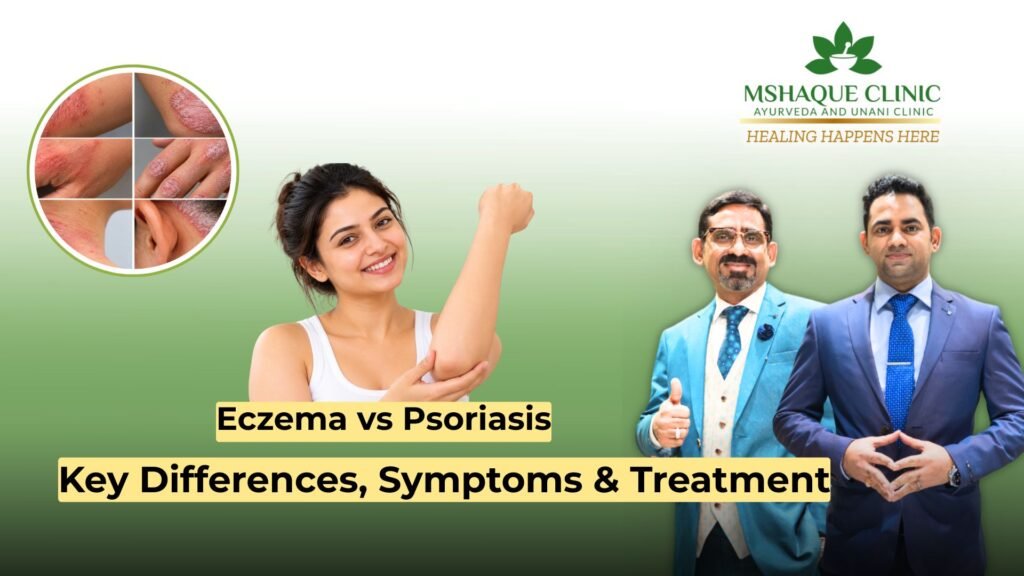
Eczema and psoriasis are two separate inflammatory skin conditions that can look surprisingly alike. Both can cause red, irritated, itchy or scaly skin, which is why many people search for eczema vs psoriasis hoping for a quick answer. In short, eczema is mainly linked to a weakened skin barrier and sensitivity to triggers, with intense itching. Psoriasis is linked to an overactive immune system that makes skin cells build up too quickly, which tends to produce thicker, well-defined, scaly plaques.
Symptoms overlap, so appearance alone cannot confirm which one you have. This guide explains the main differences, common triggers, how each is diagnosed, and when to get professional advice.
What Is Eczema?
Eczema is a common group of conditions that cause dry, itchy, inflamed skin. The most common type is atopic dermatitis, and people often use “eczema” and “atopic dermatitis” interchangeably. NIAMS describes atopic dermatitis as a chronic skin disorder.
Common symptoms
- Intense itching, often worse at night
- Dry, sensitive skin
- Red or darker patches, sometimes with small bumps
- Cracking, oozing or crusting after scratching
- Thickened skin from long-term rubbing
Common triggers (these vary from person to person)
- Soaps, detergents and other irritants
- Dust mites, pollen or pet dander
- Dry weather or sudden temperature changes
- Sweat, stress and certain fabrics
Commonly affected areas: inner elbows, behind the knees, neck, wrists, ankles, hands and face. In infants, the cheeks and scalp are often involved.
What Is Psoriasis?
Psoriasis is a chronic condition in which the immune system becomes overactive and skin cells multiply faster than normal. NIAMS describes this as a long-lasting disease in which the skin cells multiply too quickly. The extra cells pile up on the surface and form scaly patches.
Common symptoms
- Raised, well-defined red or purplish plaques
- Silvery-white scale on top of the plaques
- Itching, soreness or a burning sensation
- Dry, cracked skin that may bleed
- Pitted, thickened or discoloured nails
Common triggers (not everyone shares the same triggers)
- Infections such as strep throat
- Skin injury, including scratches or cuts
- Stress
- Certain medicines
- Smoking and heavy alcohol use
Commonly affected areas: outer elbows, knees, scalp, lower back, palms, soles and nails. Some people also develop joint pain or swelling (psoriatic arthritis), which needs medical assessment.
Eczema vs Psoriasis: Key Differences
| Feature | Eczema (atopic dermatitis) | Psoriasis |
| Underlying condition | Skin-barrier dysfunction with inflammation, often linked to allergies | Immune-mediated, with accelerated skin-cell turnover |
| Rash appearance | Red or darker patches with less distinct edges; may ooze or crust | Raised plaques with clearly defined edges |
| Typical itching | Often intense and a main symptom | Can itch, but often milder; may feel sore or burning |
| Texture and scaling | Dry, rough, flaky; may thicken with scratching | Thick, silvery-white scale |
| Commonly affected areas | Inner elbows, behind knees, face, neck, hands | Outer elbows, knees, scalp, lower back, nails |
| Common triggers | Irritants, allergens, dry air, sweat, stress | Infections, skin injury, stress, certain medicines |
| Diagnostic approach | Clinical exam and history; patch testing if contact allergy is suspected | Clinical exam and history; skin biopsy if unclear |
| Treatment options | Moisturisers, trigger avoidance, topical anti-inflammatories, other therapies in severe cases | Topical therapies, light therapy, oral or injectable medicines in moderate to severe cases |
These are general patterns, not rules. Some people have features of both, and some rashes don’t fit either picture.
Eczema vs Psoriasis Symptoms and Appearance

Itching: Eczema is usually itchier. Psoriasis can itch too, but many people describe it as sore, tight or burning.
Texture and scale: Eczema tends to look dry and rough. Psoriasis plaques are usually thicker, more raised and more sharply bordered, with a layered silvery scale.
Skin tone matters. On lighter skin, both conditions often look pink or red. On brown or Black skin, inflammation may look purple, dark brown or greyish, and redness can be harder to see. Eczema and psoriasis can also leave lighter or darker marks after they settle. Because of this, searching for eczema vs psoriasis pictures has limits. Most online images show lighter skin, and even a perfect match to a photo does not confirm a diagnosis. A clinician needs to examine your skin.
Eczema vs Psoriasis on Hands, Face and Scalp
Hands and fingers. The difference between eczema and psoriasis on hands can be subtle. Hand eczema often causes dryness, itching, small blisters and cracks, and is commonly linked to frequent washing or contact with irritants. Psoriasis on the palms or fingers tends to form thicker, sharply outlined, scaly patches, and may come with nail changes.
Face and eyelids. Eczema is more common on the face, especially the eyelids and around the eyes. Facial psoriasis is less common, but can occur along the hairline or in skin folds.
Scalp. Scalp psoriasis causes thick, adherent scale that may extend past the hairline. Eczema and seborrheic dermatitis can also affect the scalp, with a more greasy or flaky look.
Other conditions can mimic both, including contact dermatitis, seborrheic dermatitis and fungal infections such as ringworm. Using the wrong cream, such as a steroid on a fungal infection, can make things worse, which is another reason to get a proper diagnosis.
Causes and Common Triggers
Eczema is associated with a weakened skin barrier, which lets moisture escape and irritants enter. Genetics, allergies and the immune system all play a role.
Psoriasis is associated with immune-system activity that speeds up skin-cell turnover. Genetics also contribute.
Neither condition is caused by poor hygiene, and neither is contagious. Triggers differ widely, so keeping a simple diary of flare-ups can help you and your doctor spot patterns.
How Are Eczema and Psoriasis Diagnosed?
Doctors usually start with your medical and family history, your symptoms, and a close look at the skin, nails and scalp. Sometimes more is needed:
- Patch testing for suspected contact allergy
- Skin scraping to rule out a fungal infection
- A small skin biopsy when the diagnosis is unclear
Self-diagnosis from online photographs is unreliable, because the two conditions overlap and many other rashes look similar.
Psoriasis vs Eczema Treatment
Neither condition has a cure that works for everyone, but both can usually be managed well. The right approach depends on the diagnosis and severity.
Common to both
- Regular moisturiser and gentle skin care (lukewarm water, mild fragrance-free cleansers)
- Identifying and avoiding personal triggers
Medical treatments (prescribed by a doctor)
- For eczema: topical corticosteroids, non-steroid anti-inflammatory creams, and, in persistent or severe cases, light therapy or systemic and biologic medicines
- For psoriasis: topical corticosteroids, vitamin D-based creams, light therapy, and, for moderate to severe disease, oral or injectable medicines
Ayurveda and Unani Approaches to Supportive Skin Care
At MSHAQUE Clinic, an Ayurveda and Unani clinic in Kolkata, some patients explore traditional medicine alongside conventional care. These systems often emphasise diet, lifestyle, stress management and gentle skin care. It is important to be clear about what this means:
- Traditional approaches are not proven cures for eczema or psoriasis.
- The clinical evidence for many traditional therapies is limited or still developing, whereas the conventional treatments above are supported by stronger trial evidence.
- Traditional care should complement, not replace, medically indicated treatment.
- Never stop or change prescribed medicines without speaking to your doctor.
If you are interested in supportive care, discuss it openly with your treating doctors so everything works together safely.
Can You Have Both Eczema and Psoriasis?
Yes. It is possible, though uncommon, to have both conditions at the same time. When a rash doesn’t clearly fit one pattern, or treatment isn’t working as expected, a clinical assessment is the best way to find out what is going on.
Frequently Asked Questions
1. What is the difference between eczema and psoriasis?
Eczema is mainly a skin-barrier and sensitivity problem with intense itching. Psoriasis is an immune-mediated condition with fast skin-cell turnover, causing thick, well-defined, scaly plaques.
2. Is eczema and psoriasis the same?
No. They are different conditions with different causes, though they can look similar and some people have both.
3. Is eczema or psoriasis more itchy?
Eczema is usually itchier. Psoriasis can itch, but often feels sore or burning instead.
4. Is eczema or psoriasis contagious?
Neither is contagious. You cannot catch either from touching someone’s skin.
5. Which is worse, eczema or psoriasis?
Neither is universally worse. Severity varies from person to person. Eczema can severely disrupt sleep through itching, while psoriasis can be linked to joint problems in some people. Both can affect emotional wellbeing.
6. Can eczema turn into psoriasis?
No. They are separate conditions, and one does not turn into the other. However, you can have both, or a rash may be misdiagnosed at first.
7. Can you have both eczema and psoriasis?
Yes, though it is uncommon.
8. How can you differentiate between psoriasis and eczema on the hands?
Hand eczema often involves dryness, blisters and cracks linked to irritants, while psoriasis tends to produce thicker, sharply bordered scaly patches, sometimes with nail changes. Only a clinician can confirm which it is.
9. What is the difference between atopic dermatitis and psoriasis?
Atopic dermatitis, the most common type of eczema, centres on a weakened skin barrier and allergic-type inflammation, with strong itching. Psoriasis involves immune-driven rapid skin-cell buildup.
10. When should you consult a healthcare professional for persistent skin symptoms?
See a doctor if a rash lasts more than a couple of weeks, keeps returning, is painful, spreads, affects sleep or daily life, shows signs of infection (pus, warmth, fever), or comes with joint pain or nail changes. Seek care sooner if widespread redness develops.
Conclusion
The eczema vs psoriasis question comes down to a few patterns: eczema tends to be itchier, drier and less sharply defined, while psoriasis tends to form thicker, well-defined, scaly plaques. But symptoms overlap, skin tone changes how rashes look, and other conditions can mimic both, so a professional evaluation is the safest route.
If you have persistent, worsening, painful or unclear skin symptoms, please don’t rely on photos or guesswork. For further guidance, you can consult the team at MSHAQUE Clinic, including Dr. M.S. Haque and Dr. A. Perwaiz.
Disclaimer: This article is for general informational purposes only and does not replace individual medical advice, diagnosis or treatment. Please consult a qualified healthcare professional about your condition.